
- Home
- / Services
- / Manual Therapy
Manual Therapy
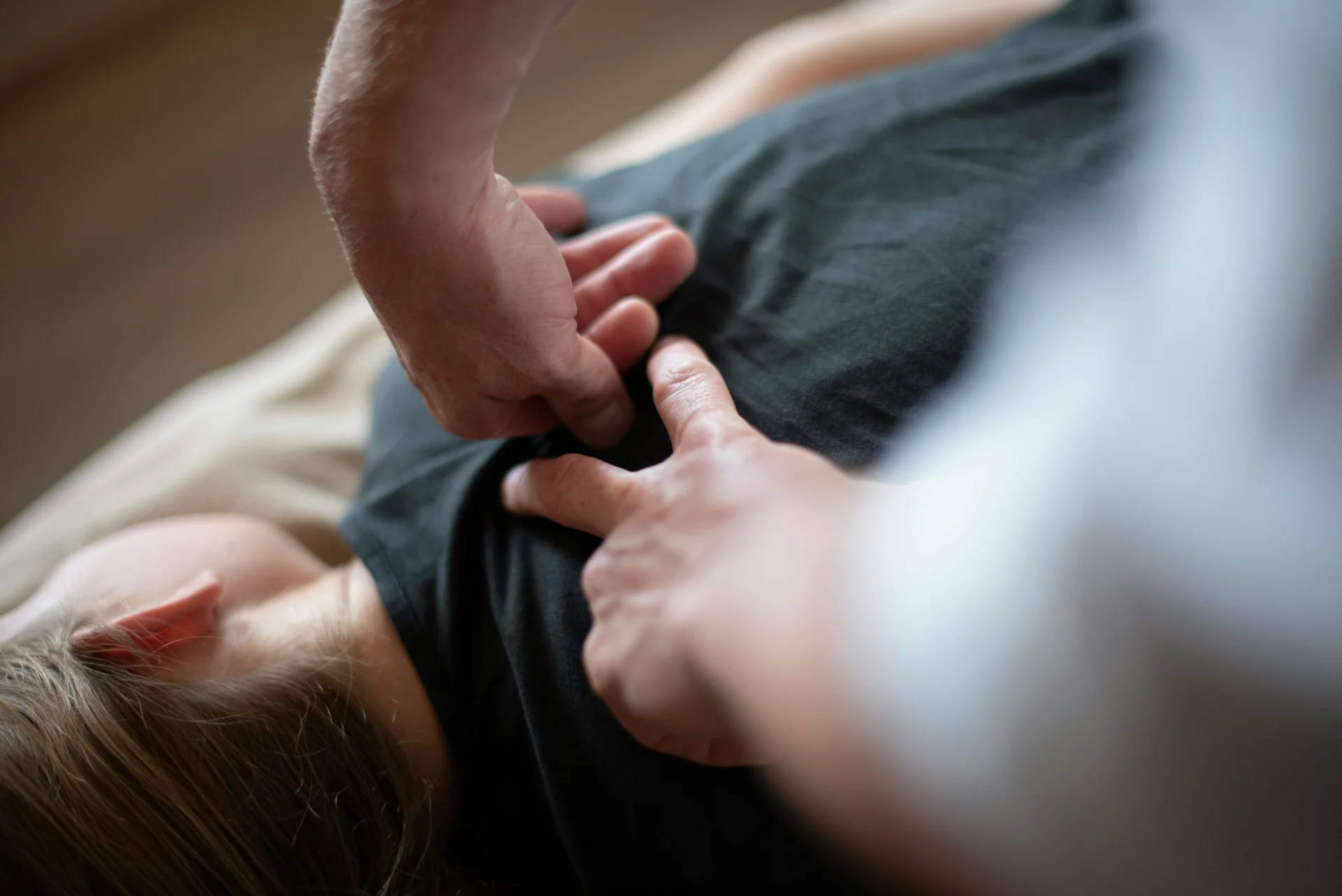
Manual therapy is hands-on treatment. At Empathy Physical Therapy, specific techniques on your joints, muscles and nerves are used to ease pain, loosen stiffness and help you move more freely, then paired with exercise so the progress lasts. Every session happens in your home.
What manual therapy does
Pain and stiffness often feed each other. A stiff joint makes muscles guard and tighten, tight muscles limit movement, and limited movement keeps things stiff. Hands-on treatment helps break that cycle. It can reduce pain in the short term and make it easier to move, which gives exercise a chance to build lasting change.
Which techniques are used, and how, depends on what the evaluation finds. No two sessions look quite the same.
Techniques we use
Joint mobilization
Gentle, controlled movements to a stiff joint to improve how it moves and ease pain. Common for the spine, shoulders, hips and ankles.
Joint manipulation
A quick, precise movement to a joint, sometimes with a pop. Used only when appropriate, and always explained first and done with your consent.
Soft tissue massage
Targeted work on tight or overworked muscles to reduce tension and pain. More focused than a relaxation massage.
Instrument-assisted soft tissue work
Also called IASTM. Smooth, contoured tools help treat tight tissue, tendon problems and scar tissue after surgery.
Cupping
Suction cups gently lift the skin and underlying tissue to ease tightness. It can leave temporary circular marks.
Manual traction
A gentle, sustained pull, usually for the neck or low back, to relieve pressure and ease nerve-related pain.
Nerve gliding
Specific movements that help irritated nerves slide more freely. Often used for sciatica and arm pain.
What a session feels like
You’ll be on a portable treatment table in your home, in comfortable clothes that allow access to the area being treated. Some techniques cause mild, temporary discomfort, but treatment shouldn’t be painful. You’ll be asked how things feel throughout, and pressure and technique adjust to you. Mild soreness for a day afterward, similar to after a workout, is normal.
What it can help with
Manual therapy is often part of treatment for back and neck pain, sciatica, joint stiffness and arthritis, tendinitis, plantar fasciitis, tension headaches and stiffness after surgery.
One part of a bigger plan
Hands-on treatment can make it easier to move, but lasting change usually comes from what you do between visits. Manual therapy opens a window; your exercises build on it.
Common questions about manual therapy
Does manual therapy hurt?
Some techniques can be briefly uncomfortable, but treatment shouldn’t be painful. Tell us how you’re feeling and we’ll adjust.
Is this the same as a massage?
Soft tissue work is one piece, but manual therapy is guided by a physical therapy evaluation and targets specific problems as part of a larger plan.
Is it the same as a chiropractic adjustment?
Joint manipulation is similar in some ways, but it’s just one of many techniques and is used only when it fits. Most sessions rely on gentler methods plus exercise.
Do I have to have joint manipulation?
No. It’s one option among many, and it’s always explained and discussed with you first.
Looking for dry needling? It has its own page →